Why FLNG Surveillance Differs from Other Offshore CCTV
Floating LNG (FLNG) facilities sit at the intersection of three challenging operating environments: offshore marine, cryogenic process, and hazardous gas handling. A surveillance system that works well on a fixed platform, an LNG carrier, or an onshore terminal will not necessarily perform the same way on an FLNG. The combination of constant motion, salt corrosion, extreme cold, and explosion risk demands camera selections, certifications, and placement strategies that are specific to this vessel type.
This article covers the surveillance considerations for FLNG facilities as a separate topic from general offshore platform surveillance. For a broader view of CCTV across all offshore platform types, see the companion article on offshore CCTV monitoring.
FLNG, FPSO, and LNG Carrier: How They Differ
FLNG, FPSO, and LNG carrier are three distinct vessel categories that share some features but have different surveillance requirements.
An FPSO (Floating Production Storage and Offloading) handles crude oil and natural gas. It produces, processes, stores, and offloads hydrocarbons. The cargo is at ambient temperature.
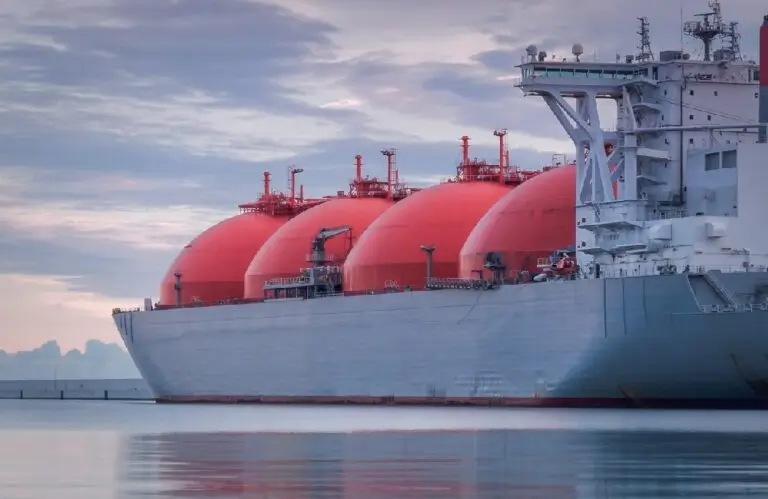
An LNG carrier is a transport vessel. It loads LNG at one terminal, sails to another, and offloads. It does not process hydrocarbons. Cargo is cryogenic at around minus 162 degrees Celsius.
An FLNG is essentially a floating LNG production facility. It receives natural gas from subsea wells, liquefies it on board, stores the LNG, and offloads to carriers. It is a process facility plus a storage tanker plus an offloading terminal, all in one vessel. The complexity is considerably higher than either of the other two.
Hazardous Zone Classification on FLNG
FLNG vessels have hazardous area zones defined by IEC 60079 standards. The zone classifications determine which camera certifications are acceptable in each location.
- Zone 0 covers areas where an explosive gas atmosphere is present continuously or for long periods, such as inside LNG cargo tanks and certain enclosed process spaces. Cameras in Zone 0 must be intrinsically safe (Ex ia) or use a similar protection method.
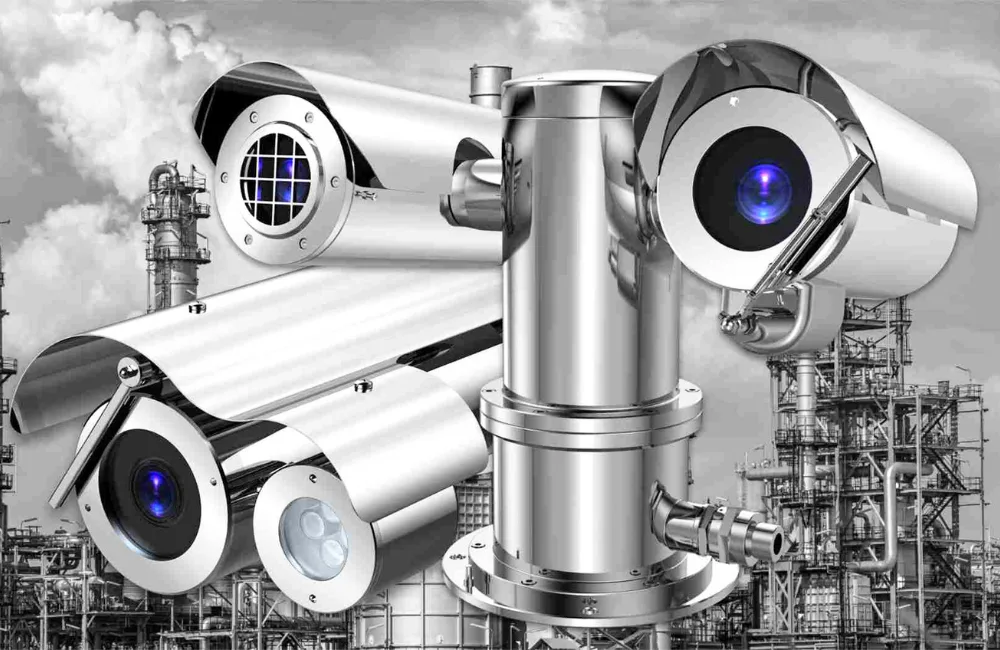
- Zone 1 covers areas where an explosive atmosphere is likely to occur in normal operation. Around process equipment, compressor housings, pump rooms, and the cargo manifold area. Cameras in Zone 1 typically use flameproof (Ex db) or increased safety (Ex de) protection.
- Zone 2 covers areas where an explosive atmosphere is not likely in normal operation but may occur for a short period. Most open deck areas adjacent to process zones, ventilation outlets, and the inboard sides of accommodation blocks. Cameras in Zone 2 can use Ex tb dust protection or Ex nA non-sparking protection.
Outside the hazardous zones, the accommodation block exterior, helideck, and bridge wing areas can use standard marine grade cameras without explosion protection, although they still need appropriate ingress protection ratings.
Marine Environment Specifications
Camera specifications for FLNG must account for the marine environment regardless of the hazardous zone.
Ingress protection (IP) ratings should be IP66 at minimum, with IP68 preferred for cameras at the splash zone or low on the hull. IP66 protects against powerful water jets. IP68 covers prolonged immersion.
Housing material should be 316L stainless steel for cameras within 50 metres of saltwater spray. Lower grade stainless or aluminium housings corrode rapidly in this environment. For cameras farther inboard, marine grade aluminium with proper coatings is acceptable.
Salt spray testing per ISO 9227 with 720 hours minimum is a reasonable requirement for outdoor cameras. Some operators require 1,000 to 1,500 hours for cameras in the most exposed locations.
Vibration tolerance matters more on FLNG than on fixed platforms. Gas turbine compressors and LNG pumps produce continuous vibration. Camera mounts and housings must tolerate vibration without affecting image stability or accelerating mechanical wear.
Camera Placement by Application
Cargo Manifold and Loading Area
The cargo manifold is the connection point between the FLNG and the offtake carrier during ship-to-ship transfer. It is a Zone 1 area during loading operations. Cameras here need Ex db or Ex de certification, 316L stainless housings, and resolution sufficient to monitor hose connections and crew movement during the multi-hour loading sequence.
Flare Tower
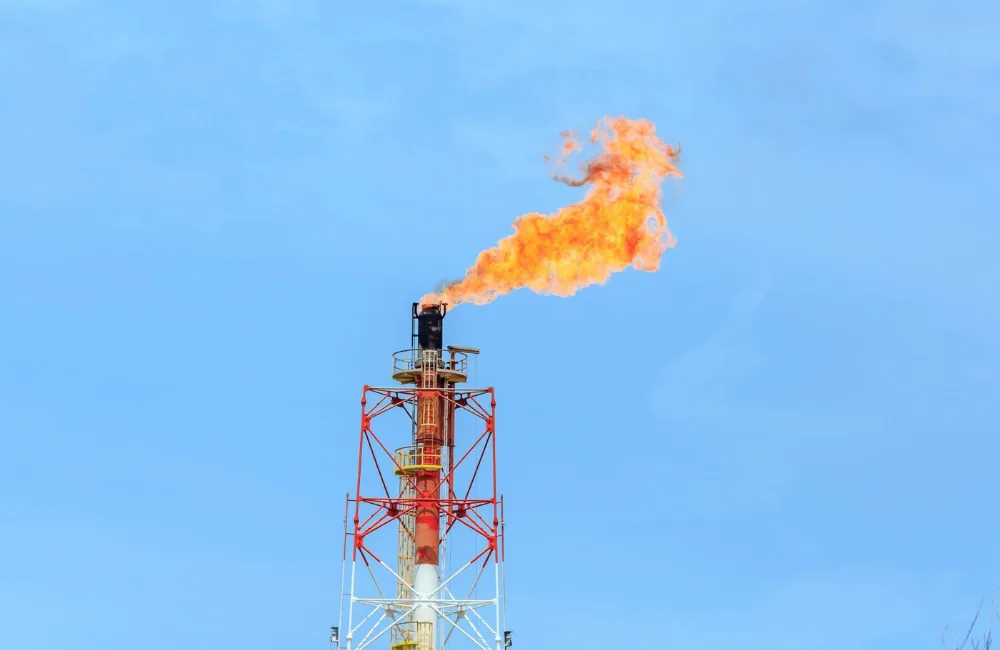
The flare tower handles emergency gas release and routine flaring. Thermal cameras at the flare tip monitor combustion temperature continuously. Visible light cameras provide a backup view and document any abnormal events. For thermal camera specification details, see the thermal imaging guide.
Helideck
Helideck surveillance must meet CAP 437 or equivalent national civil aviation requirements. Cameras cover the approach path, the landing area, and the immediate surroundings. Standard marine grade cameras are acceptable, since the helideck is outside the hazardous zones.
Pump Rooms and Compressor Houses
Enclosed pump rooms and compressor houses are Zone 1 areas with limited natural ventilation. Cameras here need full hazardous area certification, and the cabling must be installed in accordance with the same zone requirements. Image quality requirements are usually moderate, since the goal is to monitor for leaks, fires, and unauthorised access rather than to identify individuals.
Moonpool and Riser Areas
FLNG vessels with subsea connections have moonpool and riser areas that need monitoring during connection and disconnection operations. These are typically Zone 2 areas with high humidity and salt exposure. Marine grade cameras with full IP68 rating and 316L housings are the right specification.
Standards That Apply to FLNG Surveillance
Several standards govern FLNG surveillance and should be referenced in any project specification.
- IEC 60079 covers hazardous area equipment for explosive gas atmospheres. This is the foundation for all explosion protection requirements.
- IMO IGC Code (International Code for the Construction and Equipment of Ships Carrying Liquefied Gases in Bulk) sets safety standards for LNG vessels including FLNG facilities.
- SOLAS (Safety of Life at Sea) sets general safety standards for vessels, including fire detection and emergency lighting that affect camera placement.
- Class society rules from ABS, DNV, Lloyd’s Register, or Bureau Veritas apply to the specific FLNG and may include surveillance requirements as part of the class certification.
- CAP 437 (UK) or equivalent national regulations cover helideck surveillance.
What Governs an FLNG Surveillance Design
An FLNG surveillance specification should be developed in close coordination with the project safety case and HAZID (Hazard Identification) review. The hazardous zone drawings drive the camera certification requirements zone by zone. The marine environmental conditions drive the IP and material requirements. The operational requirements drive the resolution, frame rate, and storage specifications.
FLNG facilities require surveillance specifications that combine offshore marine, process safety, and cryogenic hazard considerations. The certifications, materials, and placement rules are stricter than for most other facility types, and shortcuts in any of these areas create real safety and operational risks.
The good news is that the standards and the available equipment are now mature. Cameras certified for all zones on an FLNG are commercially available from specialist suppliers. The work is in selecting the right specification for each location, not in finding suitable products.