Why Edge Processing Matters for Oil and Gas Sites
Oil and gas facilities present a specific surveillance problem. Remote locations, long backhaul distances, and harsh operating conditions make centralised video processing slow, expensive, and unreliable. A typical offshore platform with sixty 4K cameras streaming continuously to a central video management system can saturate a 100 Mbps backhaul link within minutes. When the link drops the entire surveillance system can possibility go dark.
Edge based CCTV solves this by moving the analytics workload from the central server to the camera or to a local gateway. The camera processes video locally, applies object detection and event filtering on the spot, and only transmits clips and metadata when something actually happens. This approach changes the economics of surveillance for remote sites and is now standard practice for new oil and gas installations.
What Edge Surveillance Actually Does
Edge surveillance is a category of camera and gateway architecture where video analytics run on dedicated hardware close to the camera, not on a server elsewhere. The hardware can be a system on a chip (SoC) inside the camera itself, or a small industrial computer mounted on the same network segment.
Common edge analytics include motion detection with object classification, perimeter intrusion detection, people counting, personal protective equipment (PPE) compliance checks, and licence plate recognition at vehicle gates. These functions used to require a rack of dedicated servers. They now run on a chip that fits inside a camera housing.
The practical effect is that the camera does the watching, and the central system does the recording and reporting. This split is what makes edge surveillance attractive for oil and gas operators.
The Bandwidth Math
Consider a 4K H.265 camera streaming continuously at 8 Mbps. Sixty cameras consume 480 Mbps of sustained bandwidth. Most offshore satellite links operate at well under 100 Mbps, which means the cameras cannot all stream to shore simultaneously. Operators face a choice between recording locally with limited remote access or accepting heavy compression that destroys the forensic value of the footage.
Edge processing changes this picture. A camera that only transmits when a verified event occurs may push 0.1 Mbps on average, with brief peaks during incidents. The same sixty cameras now consume around 6 Mbps in steady state, well within the budget of any reasonable backhaul link.
Latency and Why It Matters Offshore
Satellite backhaul over geostationary VSAT systems introduces 600 to 800 milliseconds of round-trip latency. For a centralised analytics system, that means an event happens onsite, the video travels to a shore-based server, the server detects the event, and a response trigger travels back. By the time the system reacts, more than a second would have passed.
For perimeter intrusion or man overboard scenarios, that delay would be too long. An edge camera detects the event in under 100 milliseconds and can trigger a local alarm, a PTZ tracking command, or a siren without waiting for the satellite hop. The decision never leaves the platform.
Reliability During Link Failures
Backhaul links to offshore platforms and remote pipeline stations fail regularly. Weather, satellite handoffs, and equipment faults all cause outages that can last from seconds to days. A centralised surveillance system stops recording when the link drops, which is the worst possible outcome for forensic and compliance purposes.
Edge based systems continue recording locally and queue metadata for transmission when the link returns. When properly configured, the central system reconciles the gap automatically and operators see no missing footage.
Where Edge Surveillance Is Not the Right Choice
Edge is not always the answer. Heavy forensic review of historical footage benefits from centralised storage, where analysts can search across all cameras and dates from one interface. Large multisite operations often need a central video management system for unified case management. And some advanced analytics, such as facial recognition matched against a large watchlist database, still run better on dedicated servers.
At times, the right approach for most oil and gas operators is hybrid. Edge handles real-time event detection and short-term recording. The central system handles long-term storage, cross-site search, and high computation workloads. Each layer does what it does best.
Edge Hardware in Hazardous Areas
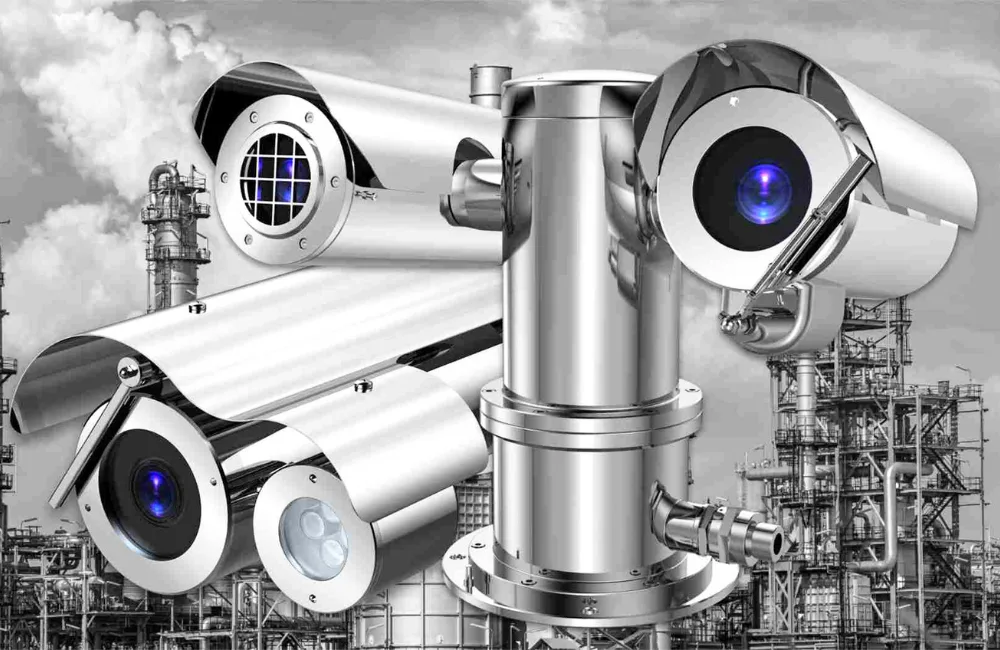
Edge cameras for oil and gas sites must carry the right hazardous area certifications. ATEX and IECEx are the two main standards for Zone 1 and Zone 2 areas, with Class I Division 1 and Division 2 used in North American jurisdictions. A camera with edge analytics is no different from any other camera in this respect, and the certification must cover the complete unit, not just the housing. Bergen Security supplies edge-capable cameras certified for all major hazardous area classifications. See the explosion-proof camera range for specifications by zone and gas group.
Practical Use Cases for Edge in Oil and Gas
The most common edge deployments in oil and gas today include perimeter intrusion detection on unmanned platforms, PPE compliance monitoring at refinery entry points, leak detection paired with thermal cameras, hot work permit area monitoring, and vehicle and tank truck identification at loading terminals.
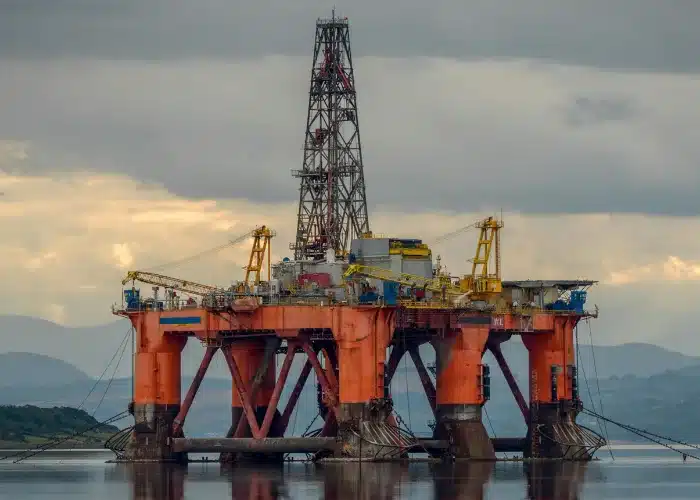
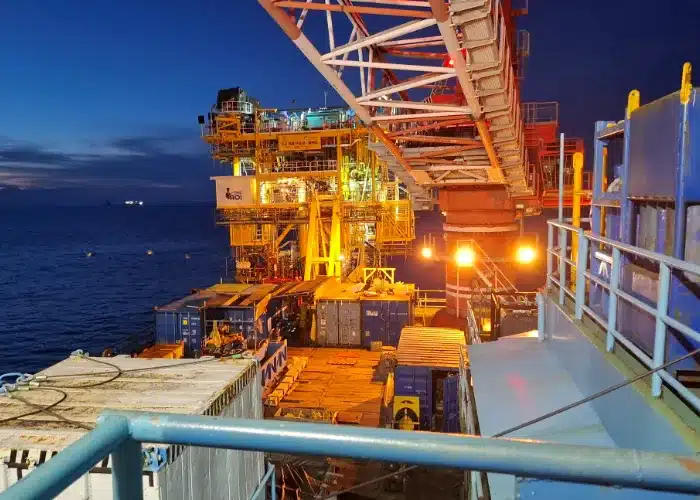
For a working example of how these are implemented on a live site, see the offshore rig case study.
How to Specify an Edge Surveillance System
Four factors decide how an edge system performs on a given site. The first is the analytics that run on the camera, such as object classification, perimeter detection, or PPE recognition, since these determine what the camera can act on locally. The second is the amount of local storage on the camera or gateway, which is typically 7 to 30 days at a minimum and governs how much footage survives a link outage. The third is the metadata format and protocol used to reach the central system, where ONVIF Profile T is the current standard for interoperability. The fourth is the hazardous area certification for the zone in which the camera will operate, which must cover the complete unit rather than the housing alone.
Edge based CCTV is no longer a niche option for oil and gas. It is the practical answer to the bandwidth, latency, and reliability constraints that come with operating in remote and hazardous environments. The technology is mature, the hardware is certified, and the cost difference against a fully centralised system is now minimal.
For new projects, edge should be the default architecture. For existing centralised systems, edge cameras can be introduced gradually as cameras reach end of life. Either way, the bandwidth and reliability benefits show up quickly.