The Surveillance Challenge at Wind Sites
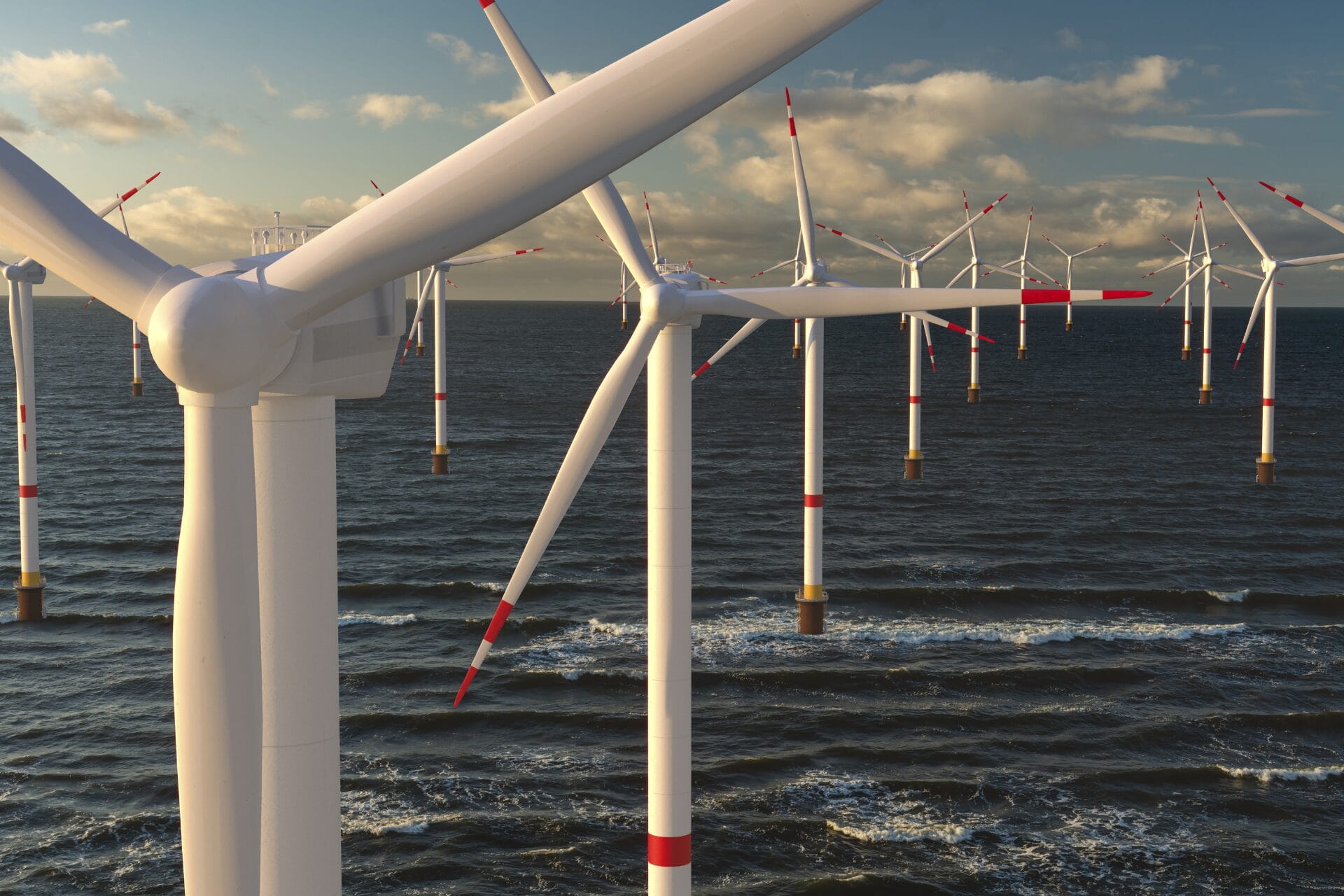
Wind farms span large areas, often in remote or offshore locations, and combine high-value rotating machinery with high-voltage electrical infrastructure. The surveillance task covers several distinct elements: the turbines themselves, the substation or offshore substation platform, the cable corridors, and the perimeter of the site. Each element has its own monitoring requirements, its own access challenges, and its own standards framework.
Onshore and offshore wind farms share many surveillance principles but differ in their environmental exposure, their access difficulty, and the standards that apply. This article covers both, with notes on where the requirements diverge.
Turbine Surveillance
Most modern wind turbines include integrated cameras as part of the original equipment package. These cover the nacelle interior, the tower base, and in some designs the rotor and blade roots. The feed goes back to the SCADA system rather than to a dedicated CCTV platform, and the primary role is operational rather than security.
Where dedicated surveillance is added, the typical positions are the base of the tower, the entry doors, and the platform at the bottom of the nacelle ladder. Tower base cameras monitor unauthorised entry and maintenance access. Door cameras log all personnel movements into and out of the tower. Platform cameras provide visibility during maintenance operations and support emergency response if a worker becomes incapacitated.
Vibration is a significant factor inside a turbine. Tower base cameras experience the structural movement of the tower itself, which can be substantial during high wind conditions. Camera mounts must be designed for this environment, and image stabilisation features become more useful than they would be in a fixed building installation.
Substation Surveillance
The substation is where the output from multiple turbines is collected, stepped up, and connected to the grid. It contains transformers, switchgear, and protection equipment with significant safety hazards and a significant capital value. Surveillance at the substation typically covers the perimeter, the high-voltage compound, the control building, and the transformer bays.
Perimeter coverage uses pole-mounted cameras with overlapping fields of view to detect intrusion. Thermal cameras work well here, particularly for unmanned substations where the alarm response time is critical. The thermal layer flags any human-sized heat signature crossing the perimeter, and a visible light camera then provides the colour identification needed for response.
Inside the high-voltage compound, cameras must respect the safety zones around live equipment. Cable routes from the cameras back to the recording system must follow proper segregation rules to avoid coupling between high-voltage power circuits and low-voltage signal circuits.
Offshore Wind Specifics
Offshore wind farms add the complexity of marine operations. The offshore substation platform (OSS) is the equivalent of an onshore substation but built on a fixed jacket or floating structure in open sea. Surveillance on an OSS combines the substation requirements above with the marine environmental and safety requirements typical of any offshore installation.
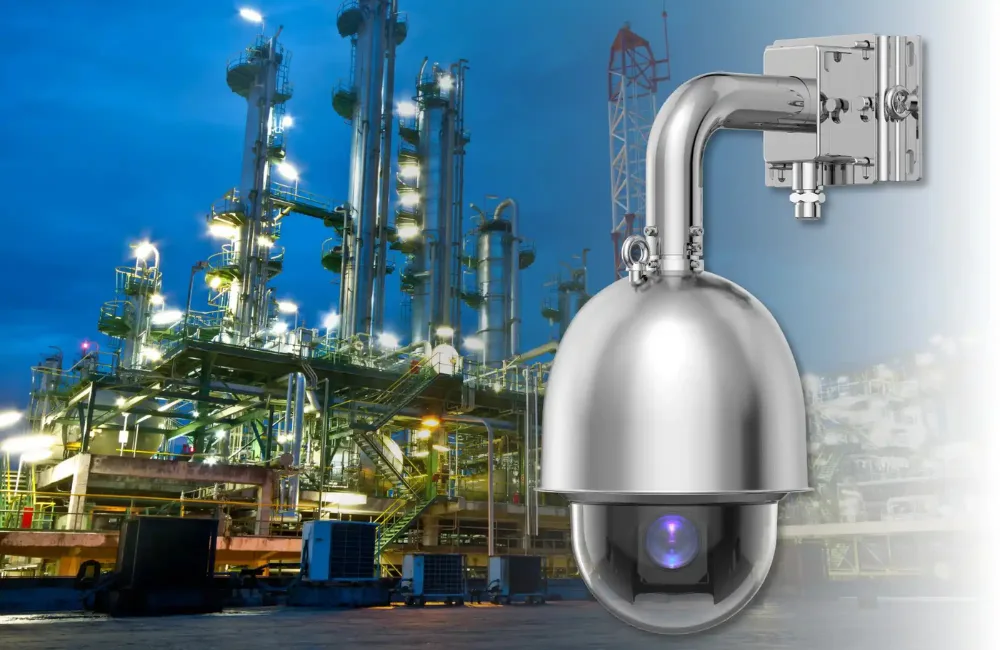
Camera housings must be 316L stainless steel for any position exposed to salt spray. IP66 is the minimum ingress protection rating, with IP68 preferred for the lower deck positions. Vibration from transformer cooling fans and any backup generators must be considered in mount design. Most offshore substations are unmanned and rely on remote monitoring. The surveillance system must operate reliably across the link to the onshore control centre, which is typically a fibre optic submarine cable with redundant routes. The bandwidth and reliability constraints are similar to those of offshore oil and gas platforms, and edge processing techniques apply directly.
Helideck and Crew Transfer Vessel Coverage
Larger offshore substation platforms include a helideck for crew transfers. Helideck cameras must meet CAP 437 or the equivalent national civil aviation requirements. Coverage includes the landing area, the approach path lighting, and the immediate surroundings.
For platforms accessed by crew transfer vessel (CTV) rather than helicopter, the boat landing area needs camera coverage. CTV transfers happen in significant sea states and require visibility of the access ladder, the platform fenders, and the immediate sea surface. Low-light cameras with wide dynamic range are the right choice here, since transfers often take place at dawn, at dusk, or against strong glare off the water.
Cable Corridor and Inter-Array Monitoring
The cables that connect turbines to the substation and the export cables that connect the substation to shore are critical assets. Direct CCTV monitoring along the cable route is impractical due to the route length, but cameras at key infrastructure points such as the landfall, the cable termination on the OSS, and any cable junctions provide coverage of the highest-risk points.
Anchor strikes from fishing vessels and merchant shipping are the dominant threat to subsea cables. Surveillance of the cable corridor relies primarily on AIS (Automatic Identification System) integration rather than CCTV, but cameras at the landfall and on the OSS support post-incident investigation when a strike is suspected.
Standards That Apply
Wind farm surveillance specifications reference several standards depending on jurisdiction and farm type.
IEC 61400 is the family of standards covering wind turbines. Part 25 covers communication for monitoring and control. Part 24 covers lightning protection, which affects camera installation.
For offshore wind, IEC 61400-3 covers design requirements for offshore wind turbines, and the relevant marine and electrical safety standards apply alongside it. Grid code requirements vary by country. The UK’s National Grid ESO, Germany’s TenneT, and Denmark’s Energinet all publish requirements that reach substation surveillance through their broader monitoring and control rules.
CAP 437 or equivalent national rules apply to offshore wind helidecks. NORSOK standards apply to Norwegian offshore wind installations. DNV and ABS class society rules apply to floating wind installations.
Remote Operations and Centralised Monitoring
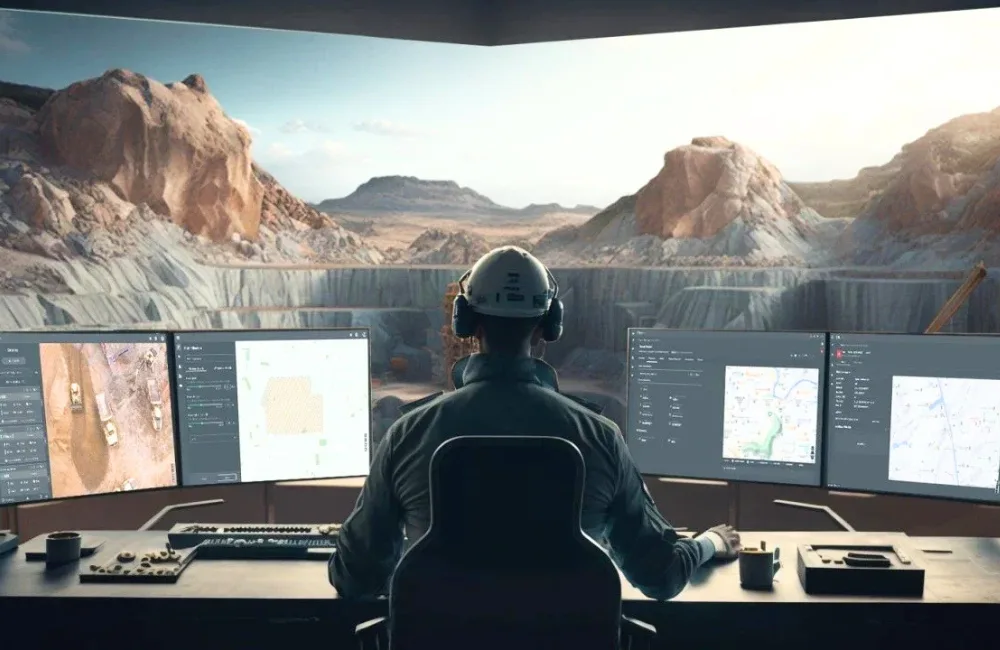
Most wind farms, both onshore and offshore, are operated from a remote operations centre rather than from a control room on the site itself. The remote operations centre may sit hundreds of kilometres from the farm and may oversee multiple farms simultaneously. The surveillance system must support this operating model, which has implications for bandwidth, alarm handling, and access management.
Bandwidth between the farm and the operations centre is the first design constraint. For onshore wind, the connection is usually a leased fibre or microwave link with adequate capacity for continuous video streaming if needed. For offshore wind, the connection is the submarine fibre that also carries the SCADA, operational, and grid telemetry traffic. Video streams compete for capacity with all other traffic, and edge processing at the OSS becomes important to keep bandwidth use predictable.
Alarm handling at a multi-farm operations centre needs careful design. An operator monitoring three or four farms cannot watch every camera continuously. The alarm logic must surface events that need attention and filter out routine activity. AI classification at the camera or at the edge gateway helps significantly here, with alarms tied to specific events such as personnel arrival, gate opening, or perimeter intrusion.
Access management for remote viewing follows the same principles as cybersecurity for any industrial CCTV system. Named user accounts, multi-factor authentication for administrator access, and a clear audit trail are baseline requirements. The remote operations model multiplies the importance of getting this right, since the consequences of an account compromise extend across the entire fleet rather than to a single site.
Specification Considerations
A wind farm surveillance specification develops alongside the electrical single line diagram, the safety case, and the operations and maintenance philosophy. The location of each camera follows from the asset map and the access plan. The certification and material requirements follow from the environment at each location. The integration with SCADA and the operations centre follows from the operational concept.
One specification trap to watch for is the difference between turbine-integrated cameras supplied by the original equipment manufacturer and the dedicated surveillance cameras added by the owner. The two systems often use different protocols, different storage architectures, and different access controls. Whether they are merged into a single system or kept separate is a decision worth making explicitly at the design stage rather than discovering at commissioning.
Wind farm surveillance is a maturing field. The early offshore wind projects relied heavily on adapted oil and gas surveillance practices. As the offshore wind industry has grown, specific guidance and supplier specialisation have followed. Onshore wind surveillance continues to benefit from the broader substation security and remote site monitoring practice.
Operators starting a new project have access to a wider supplier base and clearer technical guidance than was available even five years ago. The remaining work is in matching the specification to the specific operational concept of the project, particularly around unmanned operations, remote monitoring, and integration with SCADA.